www.birdtimes.com  
[an error occurred while processing this directive]

Visit Pet Publishing's other pet sites

www.catsandkittens.com
www.dogandkennel.com


Military Macaw
By Vanessa Girton

Often overlooked when compared to their gaudily colored relatives, the military macaw, Ara militaris, has many of the personality traits of the larger macaw species in a slightly smaller body. While owning a macaw is not for everyone, the military macaw's generally even-tempered disposition can make a wonderful life-long companion for the right owner.


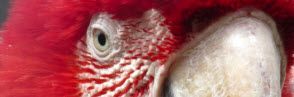
The military macaw lives in scattered pockets from Mexico to Northwestern Argentina. Unfortunately, it has almost disappeared in places where it was once quite common because of habitat loss and the pet trade. It is listed as vulnerable in Appendix I of CITES (Convention on the International Trade in Endangered Species of Wild Fauna and Flora), but is quite common in captivity. The military is found in dry forests and open woodlands in pairs or small flocks. Seeds, nuts, fruits, and berries make up their diet in the wild. These birds measure 26 to 29 inches in length with a wingspan of 39 to 43 inches and are known as the smallest of the large macaws. The overall body color is green with a patch of red feathers above the nares. Although not as visibly striking as other large macaws, it is still quite colorful with blue feathers on the wings, yellowish feathers on the underside of the wings, and red feathers around the vent and tail. The military, like other macaws, has a bare facial patch around the eyes. In these birds, the facial patch is pale pink with rows of tiny greenish black feathers.

There is some debate among biologists concerning how many subspecies of the military macaw exist, but the general consensus is at least three subspecies with slight plumage and size differences. The Buffon's macaw ,Ara ambigua, looks similar to the military but measures 34 inches in length and is quite rare in captivity.

Despite the fact that the military macaws are smaller than some of the large macaws, these birds still require a lot of space. The proper cage is one of the most important aspects of caring for any bird. The Internet is a good source of information or to order a cage, but it is always a good idea to actually look at a cage before buying it. Quality cages can be very expensive -- they sometimes cost more then the bird -- but poor quality cages will not last as long and could even harm your companion. Cage size should be no smaller than 3 « feet by 2 « feet by 4 feet. Get the largest cage you can afford, especially if the bird will be kept in the cage for a large part of the day. As a general rule, a cage can never be too big for a macaw. However, a cage that is too small can cause health and behavioral problems.

Even with the largest of cages, military macaws need to be out of their cage several hours per day, preferably interacting with human companions. Like all parrots, military macaws like to climb. Provide a cage with at least two sides of horizontal bars for exercising their feet. military macaws like to take apart their cage if given the opportunity.

Cages that bolt together with hardware that is accessible to the bird are not recommended. Macaws are known escape artists. Many can figure out simple cage locks and let themselves out. Several cage manufacturers are now using bird-proof locks especially designed for these clever birds.

Most military macaws enjoy being in the area of the house where the owners spend a lot of their time. Avoid the kitchen and high traffic areas. These active birds need twelve hours of uninterrupted sleep every night. Do not put their cage in a room where the television or radio might not be turned off until midnight and then turned on again at seven a.m.

Military macaw's nutritional requirements are similar to most of the other species of macaws and other large parrots. Variety is very important. These intelligent birds can become bored when offered a limited diet. Pellets should make up about fifty percent of the diet. Several brands are formulated and sized specifically for large macaws. If a bird is on a seed diet, a conversion to pellets must be done. Consult an avian veterinarian for advice and instructions. Vegetables and fruit should make up another 30 to 40 percent of the diet. Do not give avocado, as it is toxic. The remaining 10 to 20 percent can be seeds and healthy treats such as nuts, bird biscuits, and healthy table foods. Avoid chocolate, caffeine, excess sugar or salt, and seafood. If the macaw is eating a nutritionally complete pelleted diet, a vitamin and mineral supplement is usually not needed.

Toys are an extremely vital part of military macaws' needs. In the wild these birds are active all day foraging for food and interacting with each other. In captivity they need other ways to occupy their time. A bored military macaw could develop behavioral problems. Wood toys must be provided at all times and rotated often so they will not become bored with them. Other popular types of toys, especially for macaws, are sturdy acrylic toys. Avoid toys with small parts that could be accidentally swallowed or easily broken by powerful beaks. Keep in mind that these toys can be expensive, will be destroyed, and must be replaced. Before buying a military macaw make sure your budget allows for plenty of toys. Play stands or play gyms can also be very useful to the military macaw owner, but always supervise when the bird is out of the cage.

Wing clipping is imperative to the safety of any pet bird to prevent escape or serious injury. Military macaws have relatively large wings to support the large body and commonly need all primaries on both wings clipped. Some will need secondaries trimmed also. This can be quite an ordeal, depending on the bird, and is best done by an experienced person. An avian veterinarian can help a new owner trim wings.
Bathing is an important activity for Military macaws to keep their skin and feathers in prime condition. Many birds enjoy showering with the owner or in a shallow container with supervision. A spray bottle can be used to spray a fine mist on the bird.

Macaws in general are known for their even disposition and temperament. Military macaws are no exception. Of course every individual will be different, so it is important to interact with several birds before deciding on one. Many love cuddling with their owner(s) and being preened. Most military macaws also love to flap their wings, especially if they are in their cage for extended periods of time. Military macaws may have a favorite person, but with proper socialization will enjoy attention from other people as well.

The beak of the military is quite intimidating, but it is necessary to approach the bird with confidence or it will take control and be difficult to handle. These birds will react to the emotions of the humans around them. A calm demeanor will cause the bird to remain calm. A nervous or excited person will cause the bird to be the same. A rule that should always be followed with a large macaw is that they should never be allowed on the shoulder in order to prevent human injury. No matter how gentle a bird is, it only takes one time for a macaw to inflict major injury to the head, face, or neck. The bird will be just as happy to travel on their owner's arm.

Military macaws, in general, have moderate talking ability. Some will learn dozens of words, while some may learn only a few. For the most part, a happy macaw keeps their screaming to a minimum, but they will all scream at times. A large bird such as the military macaw can scream very loudly. Make sure that your neighbors do not mind the occasional outburst.

After doing your research and deciding that you have enough time, space, and money to be a good military macaw owner, the next step is finding a bird. Military macaws are fairly common in captivity. Breeders, bird stores, classified ads, and adoption are all places to look. They can cost between $800 to $1200. Purchase only close-banded domestically bred military macaws. These beautiful birds are endangered in the wild, in part because of smuggling for the pet trade.

When considering an adult, make every effort to verify that it was bred in captivity. Buying an adult military macaw can be just as gratifying as bring home a young bird. Macaws often adapt more easily than some other birds to life in a new home. It will take some time for an adult bird to adjust, but they will usually bond to their new owners just as strongly as a young bird.

When purchasing a young military macaw, always leave hand-feeding to the breeder or store. Take the bird home after it is weaned. Hand-feeding macaws can be very difficult and problems can lead to severe illness or death. After acquiring a new bird, schedule a physical exam with an avian veterinarian.

Military macaws are social animals and need attention from their human companions. If they do not receive enough attention behavior problems can develop. Biting, screaming, and feather plucking are the most common. All of these problems could make life with a macaw difficult, so it is extremely imperative that owners ensure the emotional well being of their macaw before they occur. Unfortunately for macaws, most will not live with one owner throughout their lives. Often it is the owner who is responsible for behavior problems that develop.

Military macaws gentle disposition and playful personality can make them excellent household additions. When given the proper care and attention, they will bring decades of companionship.

VANESSA GIRTON, a professional aviculturist also involved in ornithological field work, lives in Asheboro, North Carolina.

Adoption Web sites:

Parrot Education and Adoption Center www.peac.org
The Gabriel Foundation www.thegabrielfoundation.org
Midwest Avian Adoption and Services, Inc. www.
maars.org
Foster Parrots www.fosterparrots.org


Copyright © 2000 Pet Publishing Inc. All rights reserved. Reproduction in whole or in part without permission is prohibited.